Tree Planting in Weymouth, MA
Plenty of Weymouth yards have lost big trees in the past decade to storms, winter moth and emerald ash borer. We plant trees in Weymouth, MA to fill those gaps, choosing species that handle salt air, rocky glacial soil and nor'easters, and setting each one so it can grow for the next fifty years.
(781) 679-1061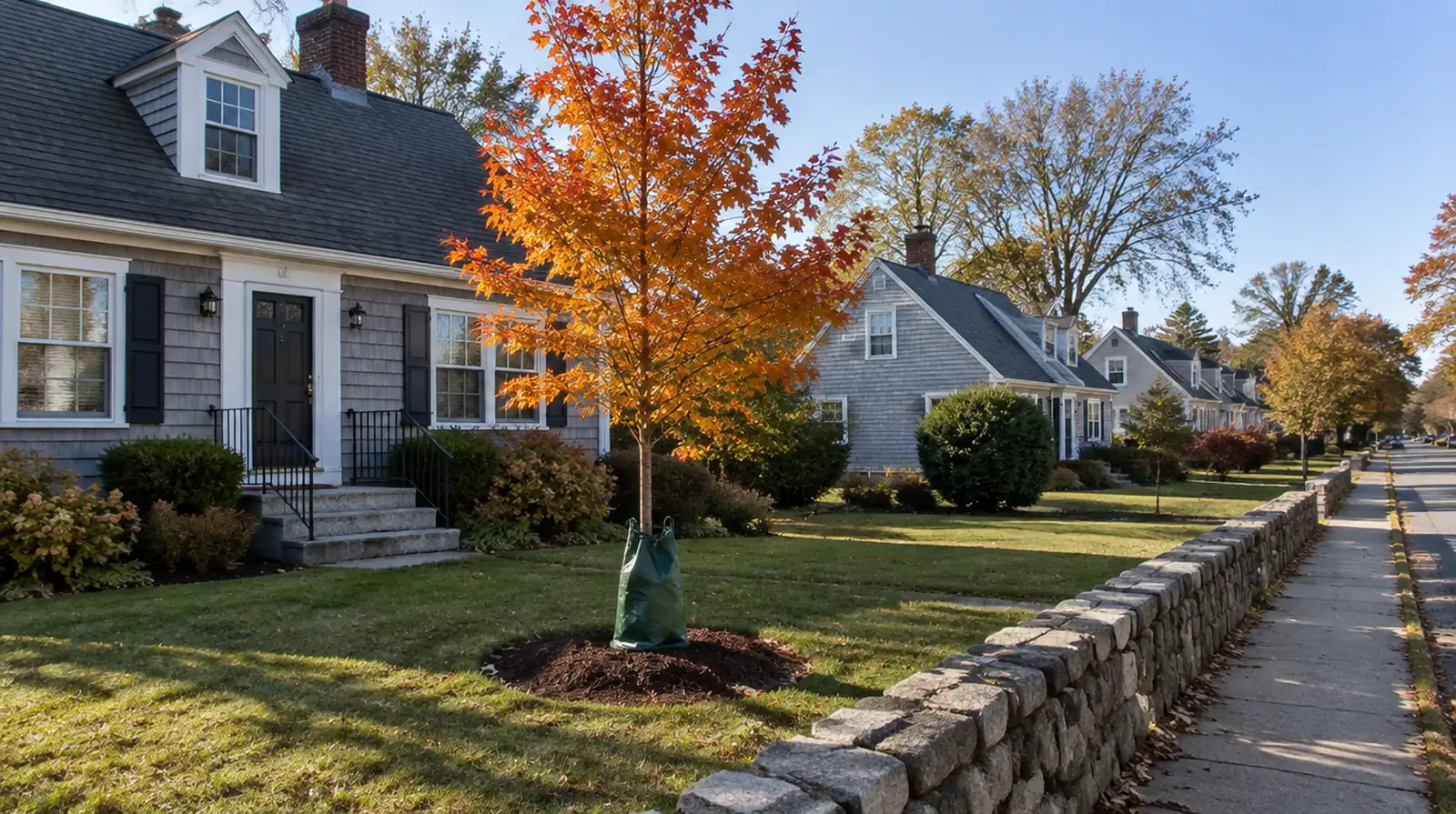
Replacing what the South Shore lost
Weymouth's tree canopy has had a rough run. Winter moth caterpillars stripped oaks and maples across the South Shore for years and weakened many of them. Emerald ash borer has killed most of the ash trees. Each nor'easter and late-season storm takes down a few more old, weakened trees. Many homeowners have had a big tree removed and now have a sunny, bare yard where shade used to be.
Planting a replacement is one of the best things you can do for the property. A well-placed shade tree cools the house in summer, blocks wind in winter and adds value to the home. The key is planting the right tree in the right spot, and planting it correctly.
Trees we recommend for Weymouth
- Swamp white oak. Tough, long-lived and tolerant of wet clay pockets and compacted ground. A strong choice where you want a big tree.
- Red maple. Native, adaptable and bright red in fall. Cultivars range from narrow street trees to broad yard trees.
- Black gum. Slow but beautiful, with outstanding fall color and few pest problems.
- Serviceberry and eastern redbud. Smaller flowering trees for front yards and spots near the house.
- Eastern red cedar and American holly. Evergreens that handle salt spray in North Weymouth and near the Back River and Fore River.
- Honeylocust and Kentucky coffeetree. Good for streetside spots where road salt is heavy.
We usually advise against planting another ash, and we are careful about sugar maple near the street, since it struggles with road salt and heat. Norway maple and Callery pear are invasive and break apart in storms, so we do not plant them.
Soil and site
Weymouth sits on glacial ground. Great Esker Park is named for a ridge of sand and gravel left by the glaciers, and that same mix of sand, gravel and rounded stones turns up in yards all over town. Some lots drain fast and dry out in August. Others, especially lower areas near Whitman's Pond and the town's brooks, hold water. We check drainage before deciding on a species, and we dig out stones from the planting hole rather than squeezing a root ball between them.
Before we dig, we contact Dig Safe, as Massachusetts law requires before any excavation, so gas, water and electric lines are marked. We also plan around overhead wires. A tree that will reach 60 feet should not go under the service line to your house.
Street trees and the tree warden
In Massachusetts, public shade trees along town roads fall under the town tree warden. If the spot you have in mind is near the street or in the strip by the sidewalk, it may be town property, and planting or removing trees there goes through the town. We will help you figure out where your property line is and keep new trees on your side of it unless the town approves otherwise.
How we plant
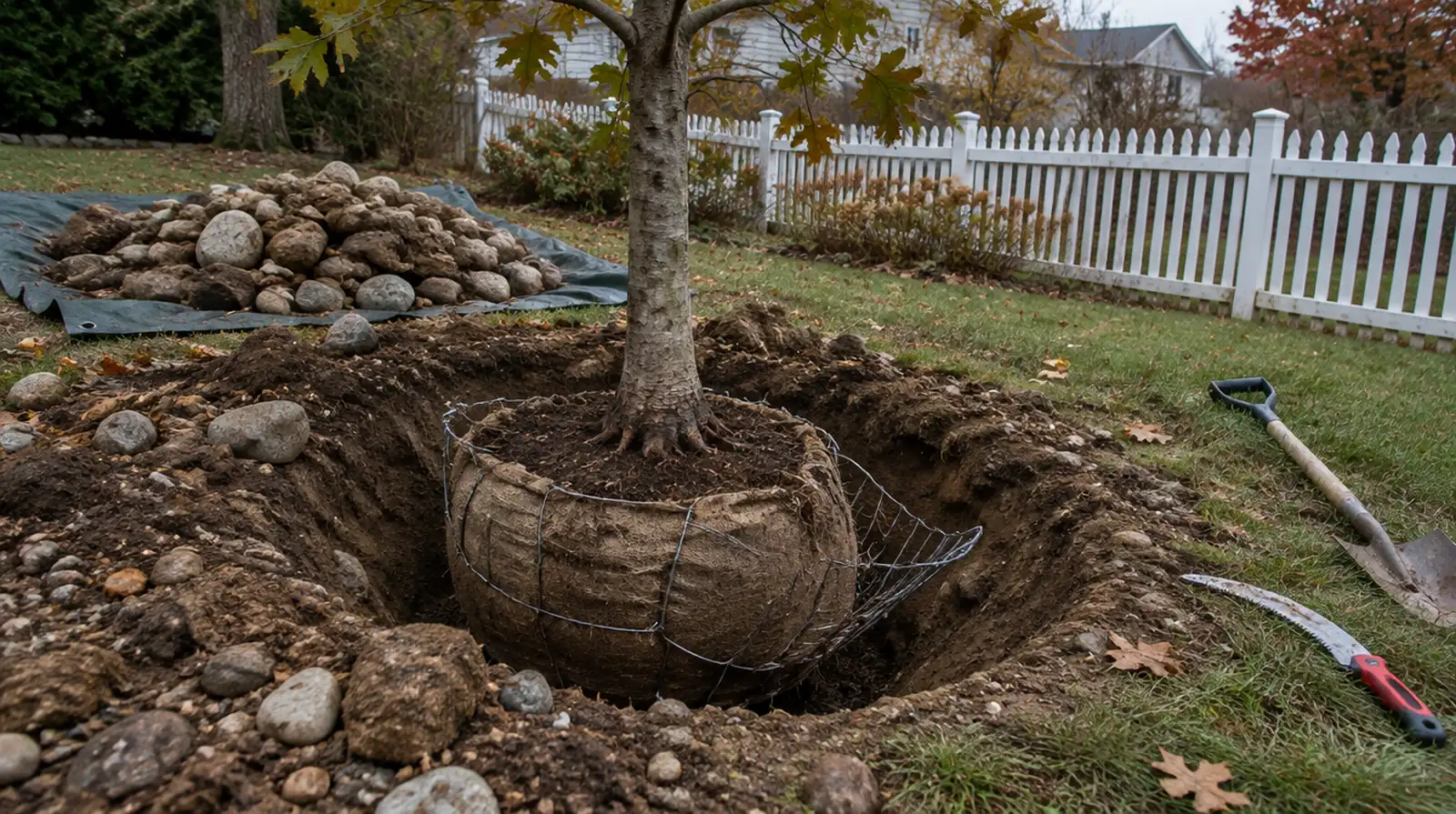
- Find the root flare. Many nursery trees are buried too deep in the root ball. We expose the flare and set the tree so it sits at or slightly above grade.
- Dig wide and shallow. The hole is two to three times as wide as the root ball but no deeper.
- Remove wire, twine and burlap from the top. Left in place, they can girdle roots and the trunk years later.
- Backfill with native soil. No heavy amendments that keep roots from growing into the surrounding ground.
- Mulch and water. A ring of mulch pulled back from the trunk, a watering bag on larger trees and a schedule for the first two summers.
When to plant
Fall, from mid-September into early November, is the best season in Weymouth. The soil is still warm, so roots keep growing until it freezes, and the tree has a full spring to establish before summer heat. Spring planting, from April to early June, works well too, but the tree will need steady watering through its first summer.
Common questions
How big a tree can you plant? From small container trees to large balled-and-burlapped trees set with equipment.
Do you grind the old stump first? Yes, if you want the new tree near the old spot. We usually shift it a few feet off the old stump.
Where else do you work? All of Weymouth, plus Braintree, Hingham, Quincy, Abington and Rockland.
Talk about new trees
Call (781) 679-1061 and we will walk your yard, suggest a few species and price the planting.
Ask about a tree check
Send a few details and we'll get back to you with a price and a date.
Powered by Splitforms